Most SaaS roadmaps are decided by vibes and egos. If the Founder likes the idea and the VP of Sales can’t object fast enough, it ships.
But what would happen if we let the market dictate what gets built?
I recently interviewed Darragh Curran, CTO at Intercom, about pricing, packaging, and their approach to AI monetisation. That conversation sparked a realisation: combining AI with outcome-based pricing will lead to hyper specialised solutions.
Let me show you how outcome-based pricing, especially paired with AI solutions, could accomplish this. Or as Charlie Munger once said: “Show me the incentive and I'll show you the outcome.”
TL;DR
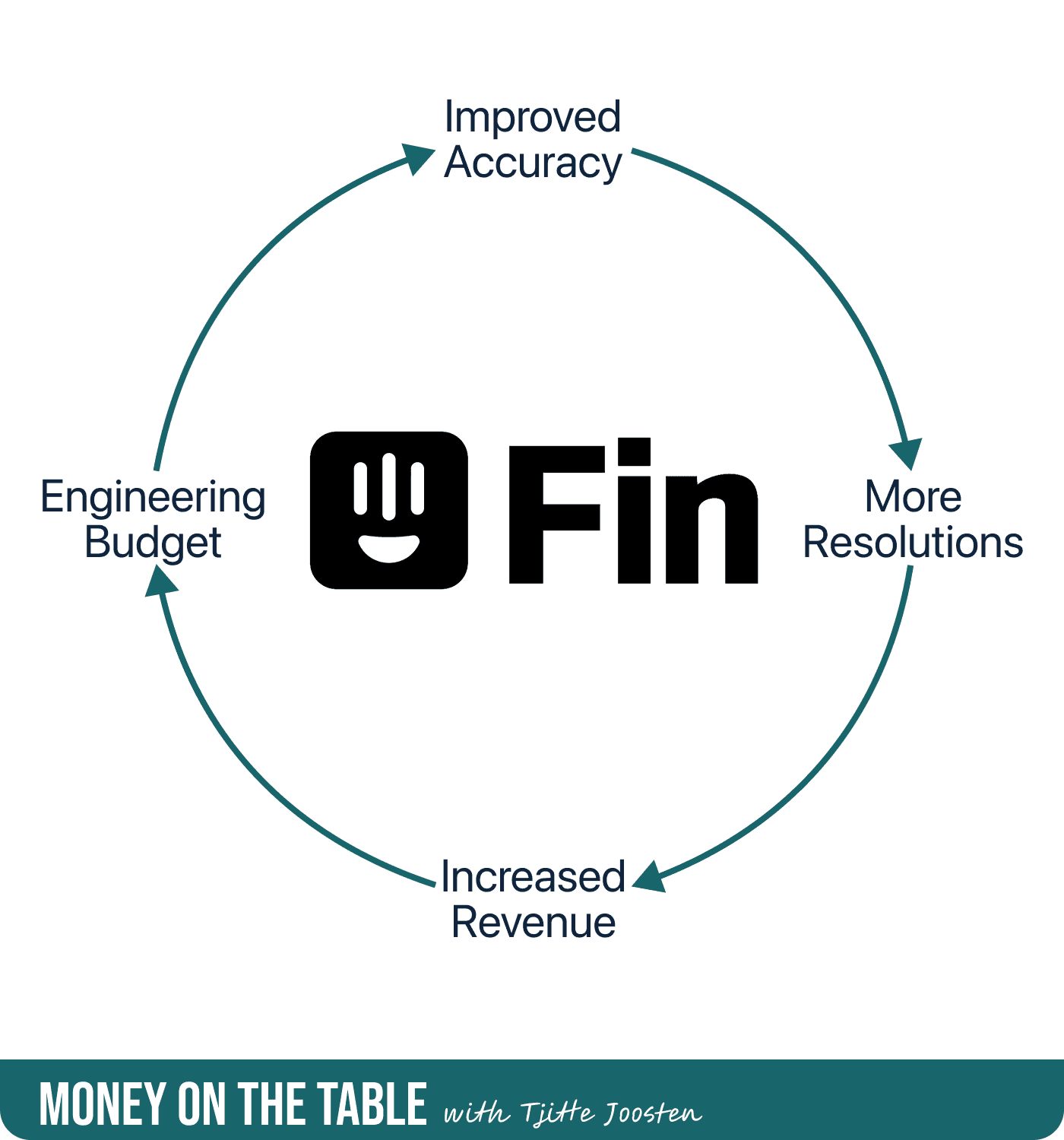
True outcome-based pricing will lead to unprecedented levels of specialisation. When vendors only get paid for specific results, all resources resource will gravitate towards delivering those results. With AI, it will all be about optimising the accuracy of your model. As that goes up, revenue increases and more resources will flow to optimising the model. The flywheel spins. Outcomes improve. Revenue grows. Budgets expand. Solutions get good.
👋 Hi, it’s Tjitte Joosten and welcome to Money on the Table, your newsletter for making sense of pricing and packaging. Subscribe to get posts like this delivered straight to your inbox.
Fin’s Flywheel: The Intercom Case Study
To show you how outcome-based pricing drivers specialisation, let’s unpack what’s happening at Intercom right now.
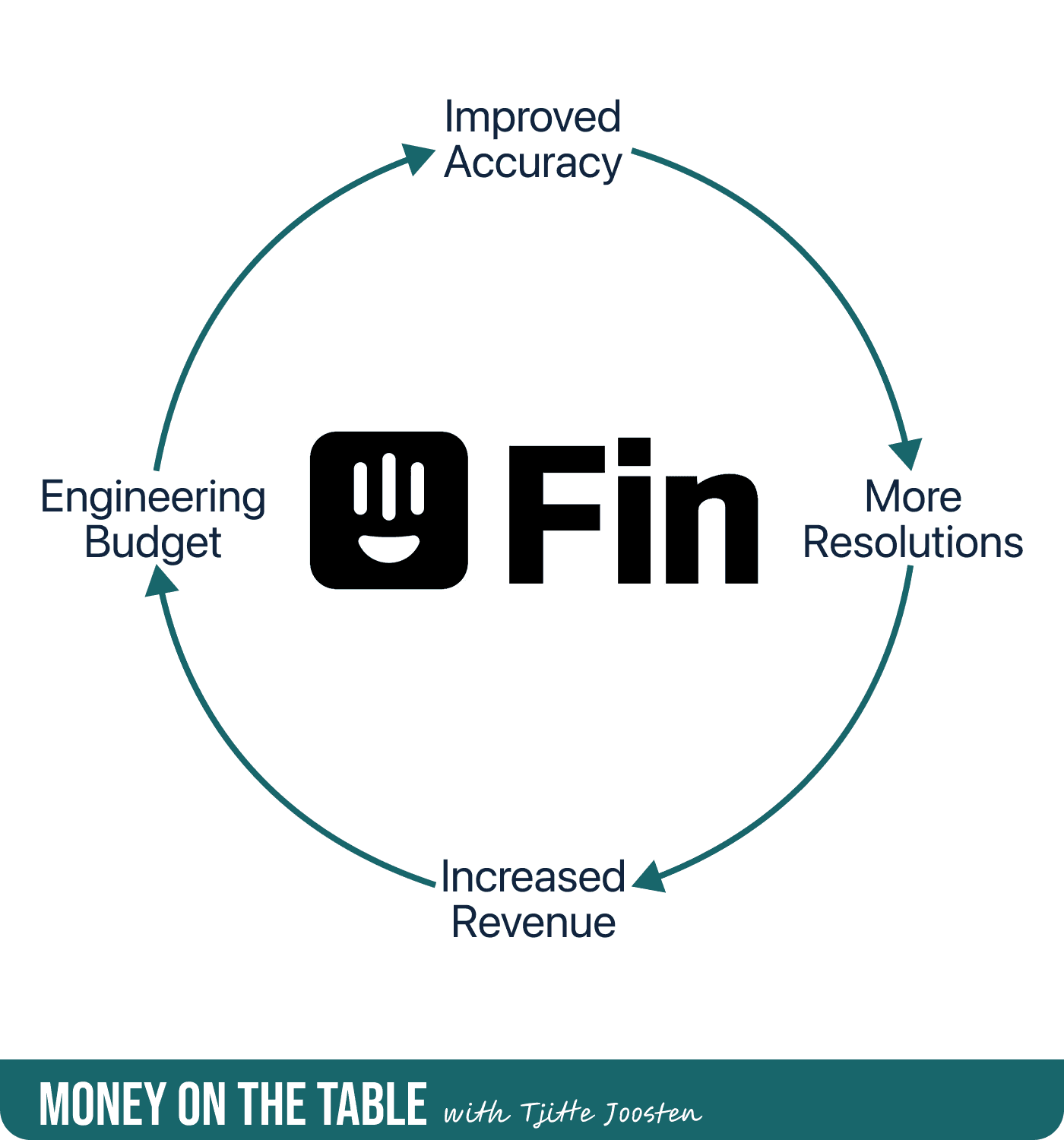
The flywheel spins. Outcomes improve. Revenue grows. Budgets expand. Solutions get good
Fin is Intercom’s AI agent for customer service and was launched in March 2023. Customers are charged 99 cents per resolution. At the time, Intercom reported a resolution rate of roughly 26%. Meaning, it earned the company 99 cents for every four customer tickets.
The AI team was always planning to increase the accuracy of the model, but once Fin started generating revenue: resources flowed back to the engineering team.
By April 2024, just a year after its launch, Fin was already reporting a resolution rate of 50%. Customer adoption surged, query volume increased exponentially, and the resolution rate doubled. Fin now made 99 cents for every two queries and cash started flowing in.
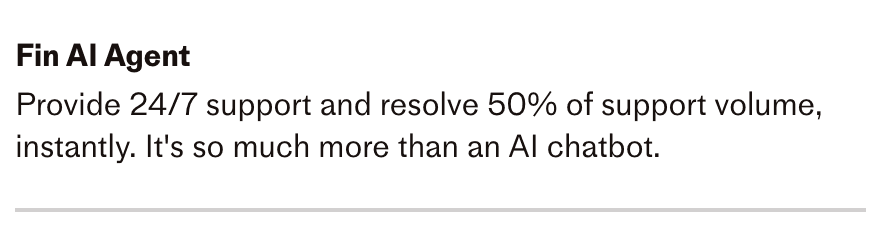
Snapshot from April 2024 at Intercom.com with Wayback Machine
Fast forward another year and Fin is reporting resolution rates of nearly 3 out of every 4 queries. Meanwhile, the query volume handled by Fin has exploded. According to Darragh, the company invested tens of millions of dollars, maybe as much as $100 million, into getting here.
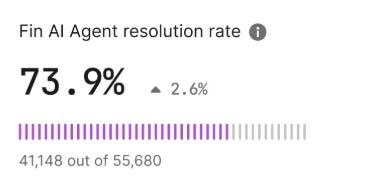
Snapshot from June 2025 at Intercom.com
The leadership always intended to invest in Fin. But once the flywheel started spinning, doubling down actually became the most rational decision. Intercom is now incentivised to get the resolution rate as close to 100% as technically possible.
And that’s exactly what outcome-based does: it makes investing into the accuracy and quality of your solution non-negotiable.
Meanwhile, clients are reducing the size of their customer service teams and get to spend more time on the queries that matter. Resulting in lower costs and increased customer retention. This frees up more budget they can spend on Fin.
The flywheel spins. Outcomes improve. Revenue grows. Budgets expand. Solutions get good.
RE:TL;DR
I’ve shown you the incentive and I’ve shown the outcome. Once you start charging for specific outcomes, it’s inevitable that resources start flowing towards improving that outcome. Properly executed, outcome-based pricing will align your whole organisation on building the best possible solution.
Want to learn more about SaaS pricing and packaging? Subscribe to Money on the Table or schedule a call at https://revfixr.com/contact

Tjitte Joosten is the Founder of RevFixr, the one-stop shop for better monetisation of your customer base. RevFixr turns pricing into your biggest growth lever. Prior to founding RevFixr, Tjitte was responsible for the commercial strategy and operations at tech companies like Docfield and Experfy.